

Sodium-ion batteries explained simply: they are rechargeable batteries that move sodium ions instead of lithium ions between electrodes. The basic idea is similar to lithium-ion batteries, but the materials and tradeoffs are different. That difference is why automakers and battery companies are watching sodium-ion closely.
The appeal is not that sodium-ion will replace every EV battery. It is that the chemistry could become useful for lower-cost electric vehicles, cold-weather performance, energy storage, and supply-chain diversification.
Sodium-ion batteries explained for EVs
Lithium-ion batteries dominate electric vehicles because they offer strong energy density, mature manufacturing, and proven reliability. Sodium-ion batteries have usually lagged behind on energy density, which means less driving range for the same pack size and weight.
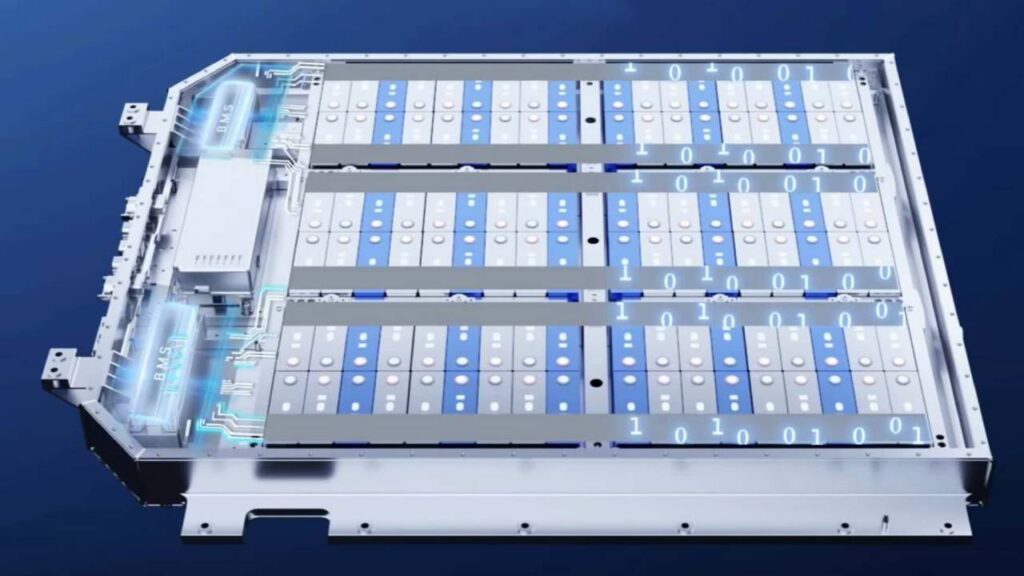
But sodium has advantages. It is more abundant than lithium and can reduce exposure to lithium price swings. Sodium-ion cells can also perform well in cold conditions, a weakness for many lithium iron phosphate, or LFP, batteries.
The International Energy Agency’s analysis on sodium-ion battery momentum says the technology is moving from lab interest toward commercial deployment, with CATL planning deployment across sectors starting in 2026 and BYD building sodium-ion capacity for EVs, grid storage, and industry.
Why battery makers care now
Battery companies want options. LFP became popular because it reduced reliance on nickel and cobalt while offering good durability and lower cost. Sodium-ion could add another option, especially where maximum range is less important than price, safety, cold performance, and supply resilience.
This matters for small EVs, city cars, two-wheelers, commercial fleets, and stationary storage. A sodium-ion battery may not be the best choice for a luxury long-range SUV, but it could make sense for a compact EV that mostly handles short city trips, delivery routes, school runs, and daily urban commutes without needing maximum highway range.
For stationary storage, weight matters less. Cost, cycle life, safety, and availability matter more. That could make grid storage one of the strongest early markets.
The main advantages
The first advantage is material availability. Sodium is widely available and less geographically constrained than lithium. That does not eliminate supply-chain risk, because cathodes and other materials still matter, but it can reduce dependence on one volatile mineral market.
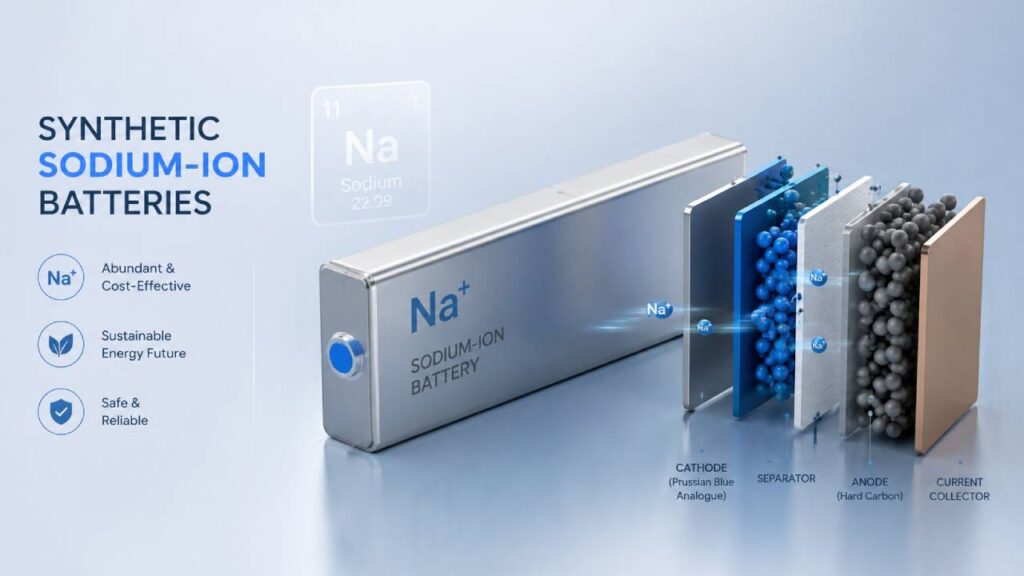
The second advantage is cold-weather behavior. The IEA notes that recent sodium-ion batteries can retain strong capacity at very low temperatures, which makes them interesting for regions where EV drivers worry about winter range loss.
The third advantage is strategic flexibility. If battery makers can produce lithium-ion and sodium-ion in parallel, they can choose chemistry based on vehicle type, market, and raw-material pricing.
The limits are real
The biggest limitation is energy density. The IEA cites the latest sodium-ion cells reaching up to around 175 Wh/kg, while LFP and nickel-rich chemistries can go higher. In real EV terms, lower energy density usually means shorter driving range or a heavier pack.
That is why sodium-ion is unlikely to take over premium EVs soon. Buyers who want maximum range, fast road-trip charging, and high performance will still benefit from advanced lithium-ion chemistries.
Supply chains are another limitation. The IEA warns that most current and announced sodium-ion manufacturing capacity is concentrated in China. That means sodium-ion may diversify minerals over time, but it does not automatically decentralize battery manufacturing immediately.
What EV buyers should watch
The key question is where automakers deploy sodium-ion first. If the chemistry appears in small city EVs, budget models, or hybrid packs designed for cold climates, that would be a practical start. If it appears in grid storage at scale, that could strengthen production and reduce costs before wider EV use.
Buyers should not judge sodium-ion only by range. They should look at real vehicle use. For a commuter car that charges at home and mostly drives predictable local routes, sodium-ion may be good enough if it lowers price and handles winter better.
The trend to watch is not a chemistry war. It is chemistry matching. EV makers will increasingly use different batteries for different jobs: LFP for affordable mainstream EVs, nickel-rich cells for high-performance models, solid-state experiments for future premium vehicles, and sodium-ion where cost and cold performance matter most.
Sodium-ion batteries are not a miracle. They are a useful new tool. That is exactly why they matter.
The next signal to watch is not just laboratory performance. It is real production volume, warranty data, pack integration, and whether automakers can price sodium-ion vehicles aggressively enough to make the chemistry visible to buyers. If early models prove durable and affordable, sodium-ion could become an important part of the EV market even without matching lithium-ion range.
That would still be a meaningful shift. EV growth depends on battery diversity, and sodium-ion gives the industry another way to balance cost, climate, and supply-chain risk.
For consumers, the simplest framing is this: sodium-ion is not the longest-range battery technology. It is the chemistry that could make some EVs cheaper and more resilient.
You can follow more developments in Technowatt’s EVs & Transportation coverage.