

EV charging speeds explained: the short version is that the charger, the car, the battery temperature, and the battery state of charge all matter. Level 1 is a fallback for overnight top-ups, Level 2 is the normal home and workplace speed, and DC fast charging is what drivers use on road trips when a 20 to 40 minute stop matters more than battery longevity.
The numbers on a charger are maximum power ratings, not promises. A 350 kW stall does not make a 150 kW EV charge at 350 kW, and a cold battery can turn an otherwise fast charger into a slower session until the pack warms up. That is why this 2026 guide focuses on real-world charging levels, connectors, and the hidden variables behind the advertised speed.
EV charging speeds explained by level
Level 1 charging uses a normal 120 V outlet in North America. The U.S. Department of Energy’s Alternative Fuels Data Center estimates about 5 miles of range per hour from Level 1 equipment, assuming roughly 1.9 kW of power. That can work for plug-in hybrids, low-mileage commuters, and emergency charging, but it is too slow for most drivers who regularly deplete a large battery pack.
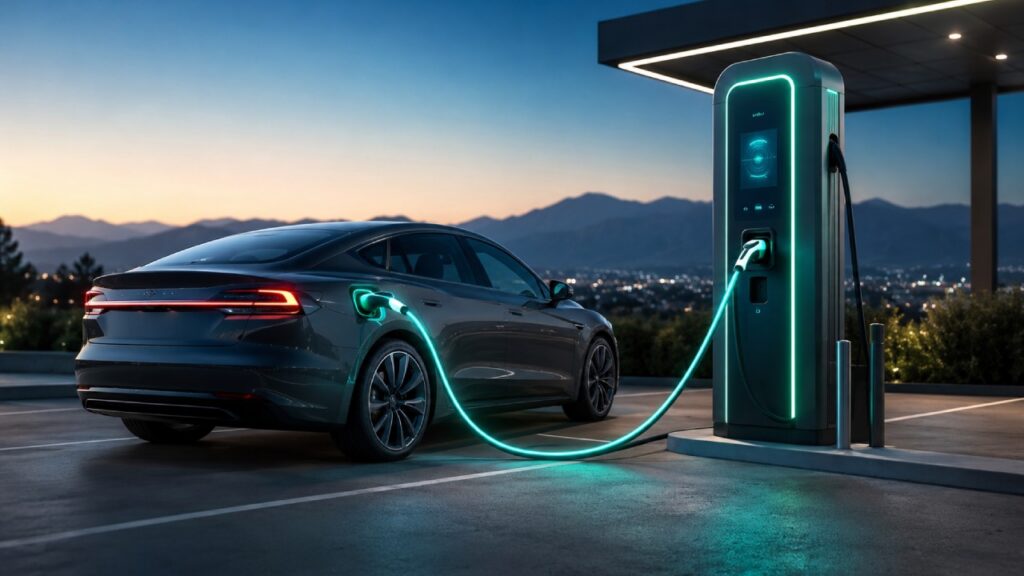
Level 2 charging is the practical default for homes, apartments, offices, hotels, and destination charging. It uses 240 V residential service or 208 V commercial service and usually delivers much more useful overnight charging. AFDC lists Level 2 at about 25 miles of range per hour, with equipment ranging from 2.9 kW to 19.2 kW. Many residential units are around 7.2 kW, which is enough to refill a daily commute while the car is parked.
DC fast charging bypasses the car’s onboard AC charger and feeds direct current to the battery. AFDC says charging time can range from less than 20 minutes on DC fast chargers to 20 hours or more on Level 1, depending on battery size, state of charge, charger power, battery chemistry, and vehicle limits. In 2026, public DC chargers commonly advertise 50 kW, 150 kW, 250 kW, 350 kW, or higher, while AFDC notes that DC fast charging equipment can reach up to 500 kW.
Why charger kW does not equal charging speed
Charging power is measured in kilowatts, while battery capacity is measured in kilowatt-hours. In simple terms, a 75 kWh battery receiving a steady 150 kW would need about 30 minutes to add 75 kWh. Real sessions are slower because EVs do not hold peak power from empty to full.
Most EVs charge fastest at a low state of charge, often somewhere between 10 percent and 50 percent. As the pack fills, the battery management system reduces power to protect battery health and manage heat. That taper is why a 10 to 80 percent DC fast-charge estimate is more useful than a 0 to 100 percent estimate. The last 20 percent can take disproportionately long, especially at a busy road-trip charger.
Battery temperature is just as important. Lithium-ion packs accept power faster when they are in the right thermal window. Some EVs precondition the battery when a DC fast charger is set as the navigation destination. Without preconditioning, winter charging can begin at a much lower power level and then climb as the pack warms.
The connector shift: CCS, CHAdeMO, and J3400
Connector compatibility is part of EV charging speeds explained for 2026 because access to the right network can matter as much as raw kW. In North America, CCS1 has been the dominant non-Tesla DC fast-charging connector, CHAdeMO remains on some older Japanese EVs, and Tesla’s connector is being standardized as SAE J3400.
The Joint Office of Energy and Transportation explains that SAE J3400 is based on the North American Charging Standard, or NACS, and that many automakers committed to adding the connector beginning in 2025. It also notes that federally funded DC fast chargers can include J3400 if they also meet CCS1 requirements. For drivers, the practical effect is a transition period: adapters, dual-cable stations, and vehicle-specific network access rules will still matter.
Tesla’s Supercharger page says the network has more than 80,000 global Superchargers and can add up to 200 miles in 15 minutes under favorable conditions. That headline is useful, but it depends on the vehicle, charger version, route planning, preconditioning, and state of charge. A non-Tesla EV using an adapter may also have different power and payment behavior depending on the automaker and charger site.
How to estimate your own charging time
Start with the energy you need, not the battery’s full capacity. If your EV consumes 30 kWh per 100 miles and you want to add 150 miles, you need about 45 kWh before charging losses. On an 11 kW Level 2 charger, that is roughly four to five hours. On a DC fast charger averaging 120 kW during the useful part of the session, it could be closer to 25 minutes.
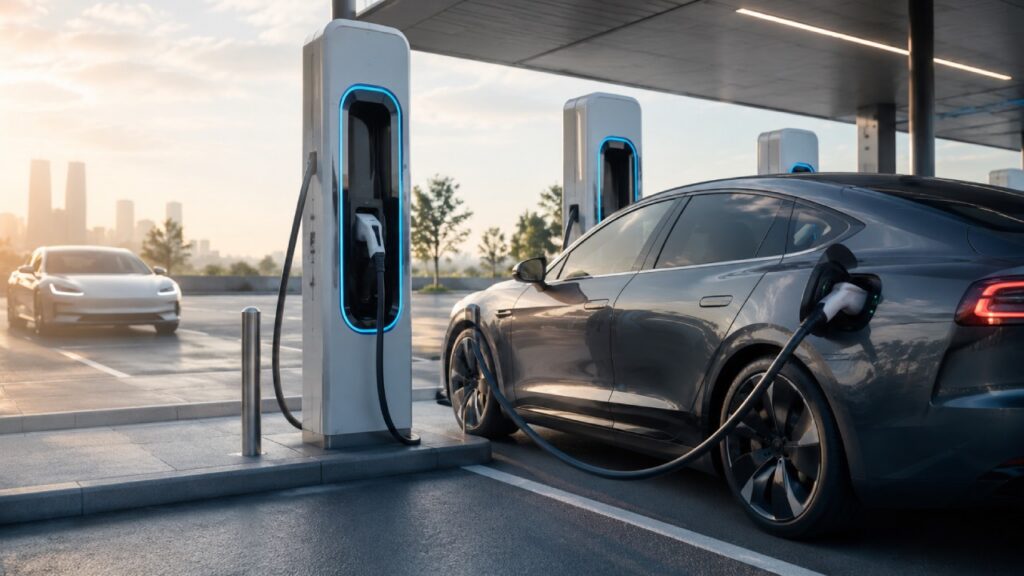
The average power during the session is the missing number. A car that peaks at 230 kW but averages 130 kW from 10 to 80 percent may road-trip better than a car with a similar peak but a sharper taper. For shopping, commuting, and overnight parking, peak DC power matters far less than a reliable Level 2 setup at home or work.
Which speed should you use?
Use Level 1 only when the car will sit for a long time and the daily mileage is low. Use Level 2 for regular ownership because it is the best balance of speed, cost, and battery friendliness. Use DC fast charging when time matters, especially between roughly 10 and 80 percent state of charge.
For apartment drivers, the best upgrade may not be a faster public charger. It may be reliable Level 2 access at home, work, or a nearby garage. For road-trip drivers, look beyond peak kW and check connector type, station uptime, stall count, real-time availability, and whether the car can precondition the battery before arrival.
The 2026 takeaway
EV charging speeds explained in one rule: match the charger to the parking time. A household outlet is measured in hours and days, Level 2 is measured in overnight convenience, and DC fast charging is measured in road-trip stops. The fastest experience comes from a car with a strong charging curve, a warm battery, the right connector, and a charger that can actually deliver the power it advertises.
You can follow more developments in Technowatt’s EVs & Transportation coverage.