

Microsoft Project Solara is one of the more interesting names circulating around Microsoft’s broader push toward AI agent devices, but it needs careful framing. As of June 2, 2026, Microsoft has not published a public product page that confirms Project Solara as a finished operating system. What Microsoft has confirmed is more concrete: Windows is being prepared for a future where AI agents can run locally, act on behalf of users, and operate inside stronger security boundaries.
That distinction matters. If Solara becomes a real Microsoft brand, it may not be a traditional Windows replacement. It is more likely to describe a new device and software layer for agent-first computing, where apps are not the only center of the experience.
Microsoft Project Solara explained through agentic Windows
The best way to understand Microsoft Project Solara is to start with Microsoft’s verified agentic Windows work. In a Windows Developer Blog post about Windows platform security for AI agents, Microsoft described Microsoft Execution Containers, or MXC, as a policy-driven execution layer for agents on Windows and WSL.
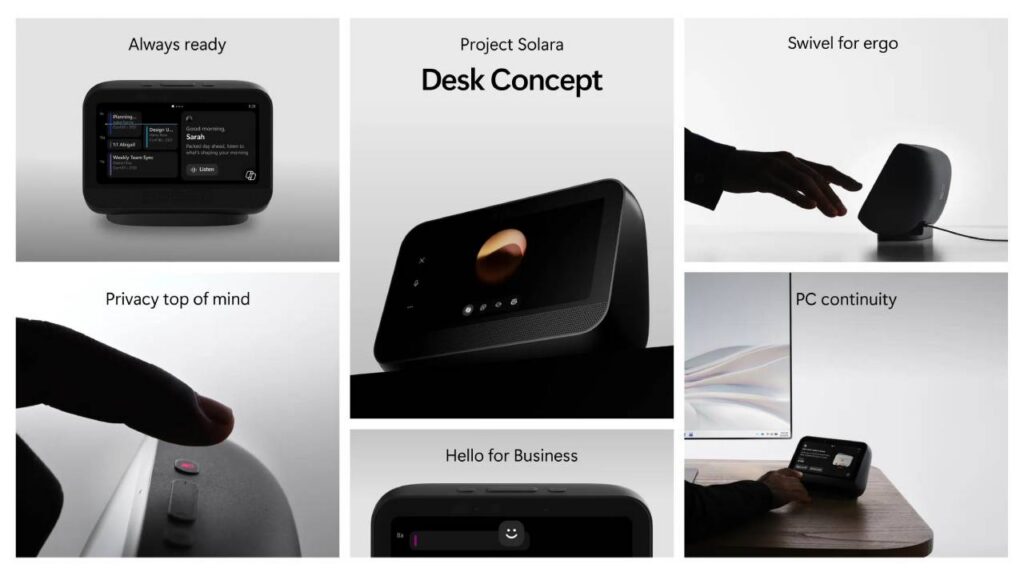
MXC is designed to constrain what agents can access and do. That is important because an AI agent is not like a normal app with predictable menus and buttons. It can generate code, chain actions, read files, call tools, and behave differently depending on the prompt. Without containment, a useful agent can become a security risk.
Microsoft is also tying this work to Agent 365, Entra, Intune, Windows 365 for Agents, and partner tools such as OpenClaw, NVIDIA OpenShell, Hermes, Manus, and OpenAI Codex. That looks less like a single app and more like an agent operating layer.
Why an AI agent OS would be different
A normal operating system manages apps, files, windows, drivers, memory, and user permissions. An AI agent operating system has to manage something more complex: autonomous software that can interpret goals and take actions.
That requires identity. The system needs to know whether an action came from a human, a local agent, or a cloud agent. It requires permissions that are more specific than “allow” or “deny.” It also requires audit trails, because businesses need to know what an agent touched and why.
This is where Project Solara could fit if the name becomes attached to a Microsoft product. It could represent the device-facing side of this shift: hardware built for local models, agent workspaces, secure execution, and background task automation.
The hardware angle: AI agent devices
Microsoft’s Windows roadmap is also being linked with new AI hardware. In a Windows Experience Blog post about RTX Spark Windows PCs, Microsoft said RTX Spark PCs are purpose-built for the new wave of agents and can run agentic workloads locally with security and containment features.
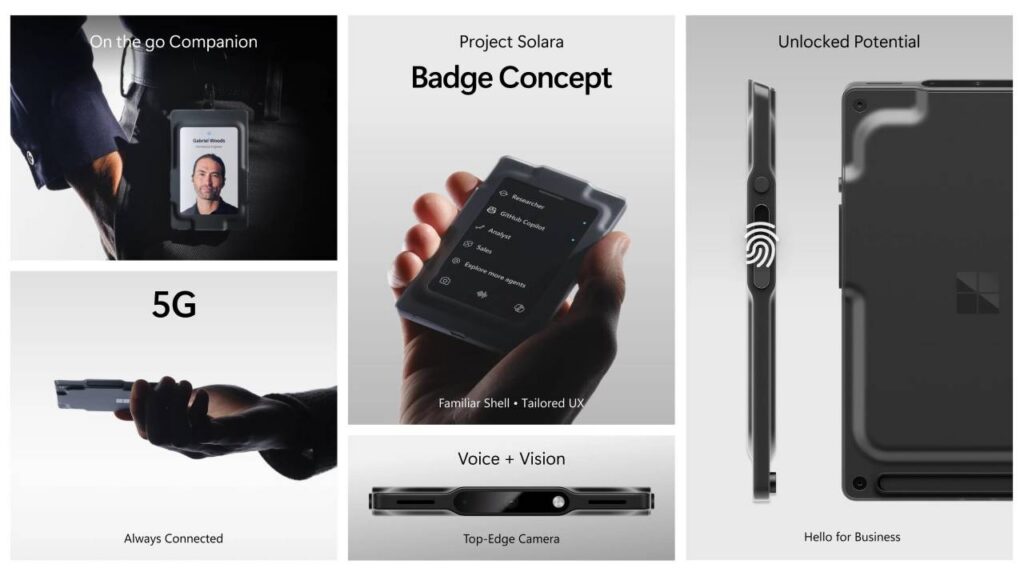
That is the practical reason an agent-first OS layer matters. If devices have enough GPU, NPU, memory, and local model support, they can run assistants without sending every request to the cloud. The device becomes a workspace for agents, not just a screen for cloud services.
For consumers, that could mean a PC that handles research, file organization, booking, summarization, and creative tasks in the background. For businesses, it could mean managed agents that process documents, run workflows, or support employees while staying inside policy boundaries.
What is still unconfirmed
The Solara name should not be treated as fully official unless Microsoft announces it directly. Search results and market chatter can move faster than product pages, and Microsoft often tests several names internally before choosing final branding.
So the safer interpretation is this: Project Solara points to a real direction, even if the brand itself remains unconfirmed. Microsoft is clearly building the foundations for agentic computing across Windows, cloud management, local devices, and partner hardware.
Why it matters
The app model is not going away, but it is becoming incomplete. If users can ask an agent to complete a task across apps and files, the operating system has to decide what that agent can see, what it can change, and how the user stays in control.
That is the real story behind Microsoft Project Solara. The future OS for AI agent devices is not only about smarter assistants. It is about trust, containment, identity, local compute, and a new user model where software can act with limited autonomy.
If Microsoft gets this right, Windows could become a serious foundation for agent devices. If it gets it wrong, users and IT teams may see agentic features as another layer of risk. The difference will come down to security design, clear controls, and whether agents actually save time.
The practical test will be boring but important. Can a user see what an agent is doing? Can IT revoke access quickly? Can the system separate an agent’s workspace from the user’s normal session? Can developers build useful automations without asking for excessive permissions? Those details will decide whether the idea becomes trusted infrastructure or another experimental AI layer.
You can follow more developments in Technowatt’s Computing coverage.