

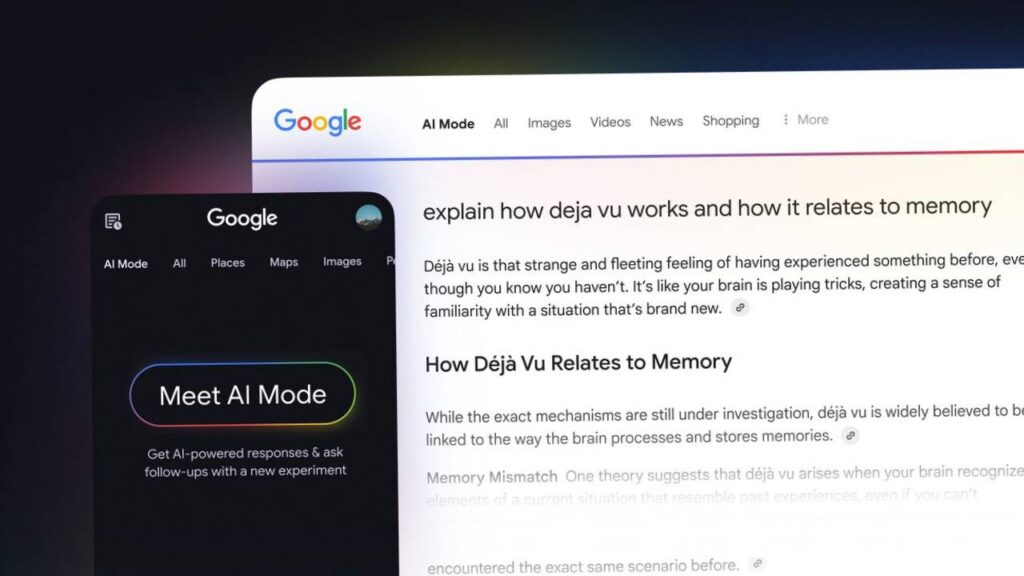
Google AI Mode explained simply: it is a more conversational, AI-powered version of Google Search that can answer complex questions, compare options, and help users keep exploring without typing one short query at a time. Instead of showing only a list of blue links, AI Mode can generate a response, cite supporting web results, and let the user ask follow-up questions.
That does not mean classic Search is gone. It means Google is turning Search into a hybrid experience. For quick questions, users may still see familiar results. For broader tasks, AI Mode can behave more like a research assistant sitting on top of Google’s index.
Google AI Mode explained for everyday users
Google says AI Mode is designed for questions that need more reasoning, exploration, or comparison than a traditional search query. In its Search help documentation, Google describes AI Mode as an experimental AI Search experience that can use advanced models to break a question into parts and search across the web.
In practice, that means a user can ask something like “best laptop for video editing under a certain budget” and receive a structured answer with tradeoffs, product categories, and follow-up paths. The result may include links, but the first interaction is often the AI-generated summary.
The experience is also multimodal. Google has been connecting Search with Gemini, Lens, shopping data, and visual results. That makes AI Mode more flexible than a simple chatbot because it can pull from live web information and Google’s broader Search systems.
For users, the biggest behavior change is query style. Instead of typing “best phone battery life 2026” and opening several tabs, a user might ask a complete question with budget, priorities, and location. AI Mode can then organize the answer and invite the next question, making Search feel more like a guided session than a one-time lookup.
How AI Mode differs from AI Overviews
AI Overviews are AI summaries that can appear at the top of normal Search results. AI Mode is a more dedicated experience. It is built for longer sessions where the user expects to ask follow-ups, refine the question, and compare options.
That difference matters for publishers and brands. AI Overviews may reduce clicks for simple questions, while AI Mode could reshape deeper discovery. Users may not visit five pages just to understand the basics. They may use the AI response to narrow choices, then click only the sources that look especially useful.
Google has framed this as an expansion of Search rather than a replacement for the open web. In a Google Search update, the company described AI Mode and AI Overviews as part of a broader shift toward more capable AI answers.
What changes for SEO in 2026
The SEO impact is not only about ranking first. It is about being useful enough to be cited, summarized, and trusted inside AI answers. Pages with clear structure, original insight, updated facts, and strong topical authority may have a better chance of being used as supporting sources.
Generic posts that repeat the same definition as everyone else will have a harder time. AI Mode can summarize commodity information quickly, so websites need to give users a reason to click. That can mean better comparisons, real testing, expert opinion, local detail, original data, or fresh reporting.
Structured headings and concise answers also matter. If a page directly answers “what is it,” “how does it work,” “who is it for,” and “what are the limitations,” it becomes easier for both users and AI systems to understand.
E-commerce and review content may feel the shift quickly. AI Mode can compare products, summarize pros and cons, and push users toward a shortlist. That raises the value of original testing, transparent methodology, fresh pricing context, and clear recommendations. Thin affiliate pages will have less room to hide.
The benefits and risks
For users, AI Mode can save time. It can turn messy research into a readable starting point and make follow-up questions feel natural. It is especially helpful for planning purchases, learning a new topic, or comparing services.
The risk is overconfidence. AI-generated answers can still miss context, rely on weak sources, or present uncertain information too cleanly. Users should keep checking linked sources, especially for health, finance, legal, or fast-changing technology topics.
For publishers, the risk is traffic volatility. If AI Mode answers more questions directly, some informational pages may lose visits. But strong specialist content can still win attention when users need depth beyond the summary.
What to watch next
The main thing to watch in 2026 is how Google balances answers and attribution. If AI Mode sends meaningful traffic to cited sources, it could become a new discovery channel. If it keeps users inside Google too often, publishers will need to rethink how they measure visibility.
Marketers should also watch Search Console and analytics changes. Traditional keyword reports may not capture every AI-driven interaction, so impressions, citations, branded searches, and assisted conversions could become more important signals.
Either way, Google AI Mode is one of the clearest signs that Search is moving from keyword matching toward task completion. The winning content will not just target keywords. It will solve the user’s problem better than a generic AI summary can.
You can follow more developments in Technowatt’s Artificial Intelligence coverage.