

NVIDIA RTX Spark is shaping up to be one of the company’s most important PC announcements in years. After months of leaks around NVIDIA’s N1 and N1X chips, the new platform is now being positioned as a major push into AI-focused Windows laptops and compact desktops.
According to NVIDIA’s announcement, RTX Spark powers a new generation of Windows PCs built for personal AI agents. The superchip combines a Blackwell RTX GPU with 6,144 CUDA cores, fifth-generation Tensor Cores with FP4 precision, and a 20-core NVIDIA Grace CPU connected through NVLink-C2C.
That combination gives NVIDIA a very different angle in the PC market. Instead of competing only through discrete GPUs, the new chip brings CPU, GPU, AI acceleration, and graphics technology into a single platform designed for laptops and small desktops.
Why NVIDIA RTX Spark matters
The headline figure is 1 petaflop of AI performance, but the broader story is power efficiency. Microsoft says RTX Spark-based PCs are designed for thin-and-light Windows systems while still supporting demanding local AI workloads, creative tools, and gaming features.
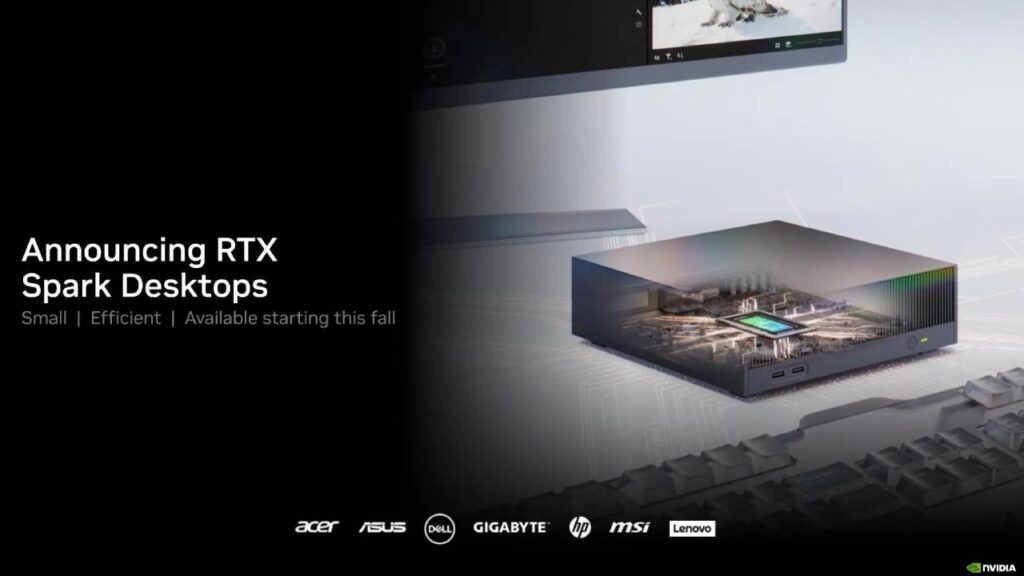
The platform also supports up to 128GB of unified memory, which is especially important for developers and creators working with large AI models. NVIDIA is pairing the chip with its existing AI software stack, including CUDA, TensorRT, RTX, DLSS, OptiX, Reflex, and G-SYNC.
For consumers, the most interesting question is whether this platform can make Windows laptops feel more like AI workstations without sacrificing battery life or portability. For developers, the appeal is more direct: local AI workflows could become practical on machines that are not traditional workstation towers.
NVIDIA RTX Spark also signals a larger strategic move. NVIDIA is no longer only powering the graphics inside PCs; it wants to define the next generation of AI PCs from the silicon up.
You can follow more developments in Technowatt’s Computing coverage.