

NVIDIA Alpamayo 2 Super is a separate robotaxi-focused announcement from the company’s new RTX Spark PC platform. While RTX Spark targets Windows AI PCs, NVIDIA Alpamayo 2 is aimed at autonomous driving developers and robotaxi systems.
In its official newsroom announcement, NVIDIA describes Alpamayo 2 Super as an open reasoning model for robotaxis. The model scales the company’s Alpamayo family from earlier 10-billion-parameter Nano models to a 32-billion-parameter teacher model, with the goal of improving perception and reasoning in autonomous vehicle stacks.
The key idea is that developers should not need to rebuild every part of a reasoning and perception pipeline from scratch. A downstream autonomous vehicle system built on Alpamayo can inherit higher-quality reasoning from a single open release, then adapt it to its own datasets, scenarios, and driving policies.
NVIDIA Alpamayo 2 and robotaxi training
NVIDIA says Alpamayo has already been downloaded close to 400,000 times, which suggests strong interest from researchers and developers. Alpamayo 2 Super is expected to become available this summer, with inference code on GitHub and model weights on Hugging Face.
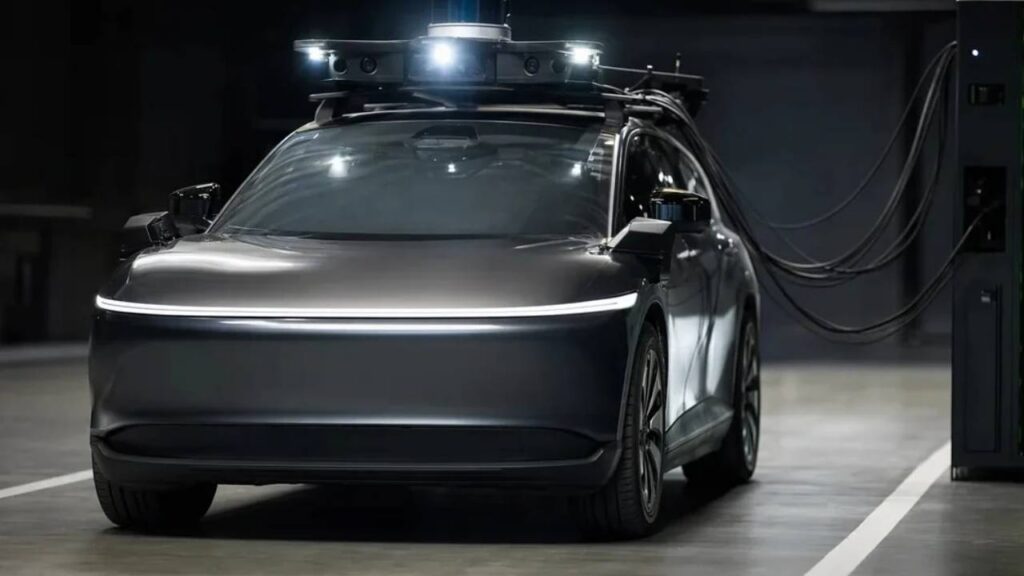
The company also introduced AlpaGym, an open-source closed-loop reinforcement learning framework. Unlike open-loop evaluation, which tests models against recorded data, AlpaGym lets models interact with simulated driving environments. Every braking, steering, and navigation decision affects what happens next, exposing compounding errors that static datasets can miss.
That could be important for robotaxi development because edge cases often appear only after a sequence of small decisions. NVIDIA is also releasing tools for automatic decision-grounded labeling and new physical AI agent skills to help developers generate data, run simulations, and validate autonomous driving systems.
NVIDIA Alpamayo 2 does not mean robotaxis are suddenly solved, but it shows how quickly autonomous driving is becoming a physical AI problem rather than only a vehicle hardware problem.
You can follow more developments in Technowatt’s EVs & Transportation coverage.